Delta · A Lemmata stylometry workbench
Every text leaves a trace.
A scholar-led, uncertainty-aware stylometry workbench for literary and digital-humanities research. Corpus choices, parameters, and limitations stay visible.
Open the workbenchRead the method noteSkip to the summary
Public alpha · Experimental
Tested with small corpora. A run accepts at most 50 texts, only a few corpora can be open at once, and large corpora can fail.
A corpus is already an argument.
Genre, date, edition, audience, source, rights, and OCR shape what a comparison can mean. Delta asks you to document texts before any analysis.
One setting is not evidence.
Guided comparisons run 100, 300, 500, and 1,000 most-frequent-word settings together. 500 MFW opens first as a pre-specified display reference, not a best or optimal setting.
Distance is a relation, not a verdict.
Nearer means more similar measured patterns inside this corpus and this setting. The numerical distance matrix is the primary evidence; the heatmap and the MDS projection are renderings of the same matrix.
Change the lens, watch the relation move.
A persuasive picture can still be sensitive to corpus composition, parameters, and projection. Delta keeps all four comparisons and every corpus warning side by side, with no winner-takes-all view and no confidence score.
Do not conclude: nearer does not mean the same author, influence, intention, or authenticity.
Keep the numbers, not just the picture.
Delta's records download as JSON and CSV files: the corpus inventory with its rights records, method settings, numerical results, and stated interpretation limits. A single FAIR package is not part of this alpha.
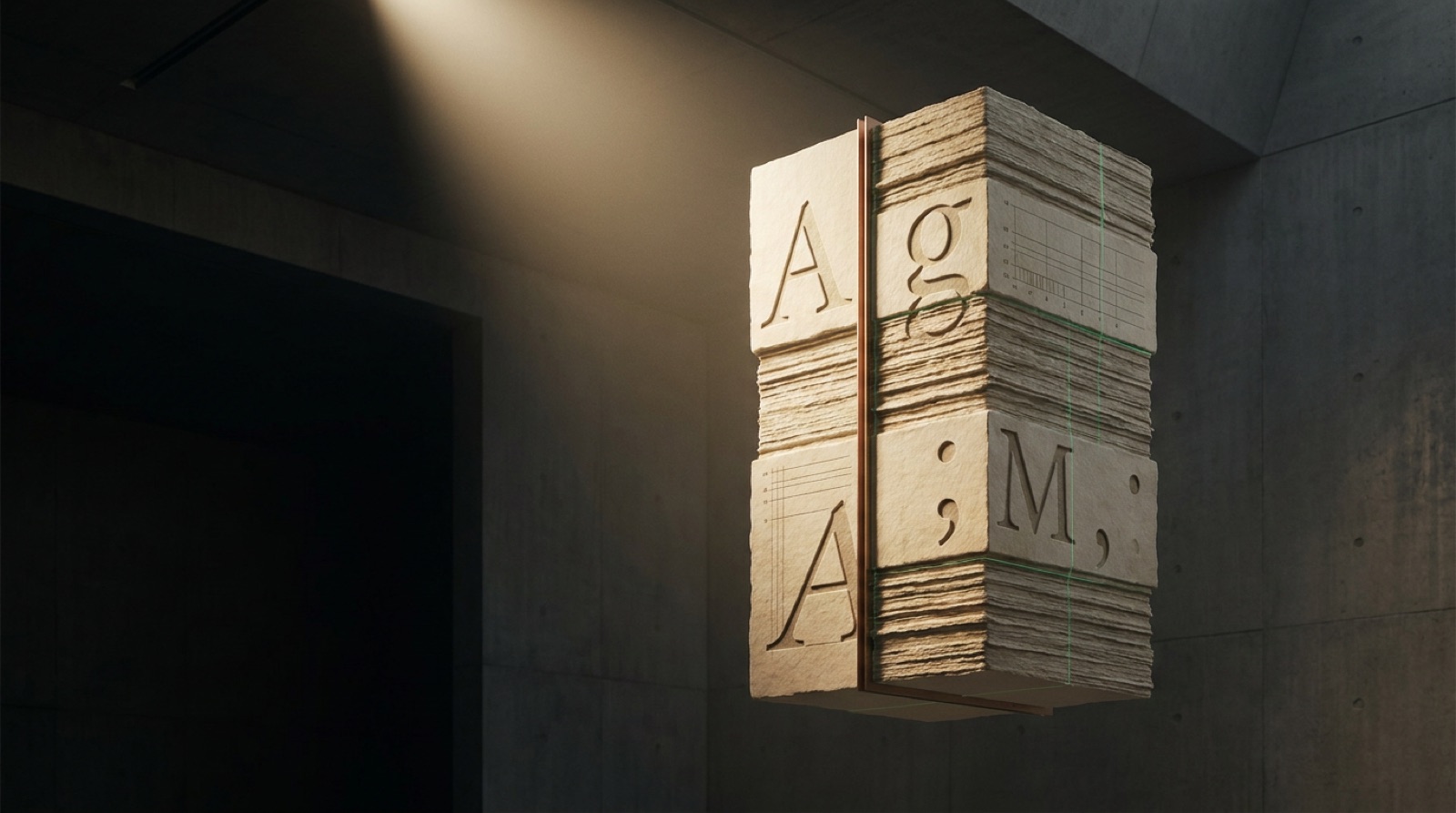
Conceptual visualisation · not an analysis result
Scroll · the corpus opens
Delta · A Lemmata stylometry workbench
Every text leaves a trace.
A scholar-led, uncertainty-aware stylometry workbench for literary and digital-humanities research. Corpus choices, parameters, and limitations stay visible.
Public alpha · Experimental
Tested with small corpora. A run accepts at most 50 texts, only a few corpora can be open at once, and large corpora can fail.
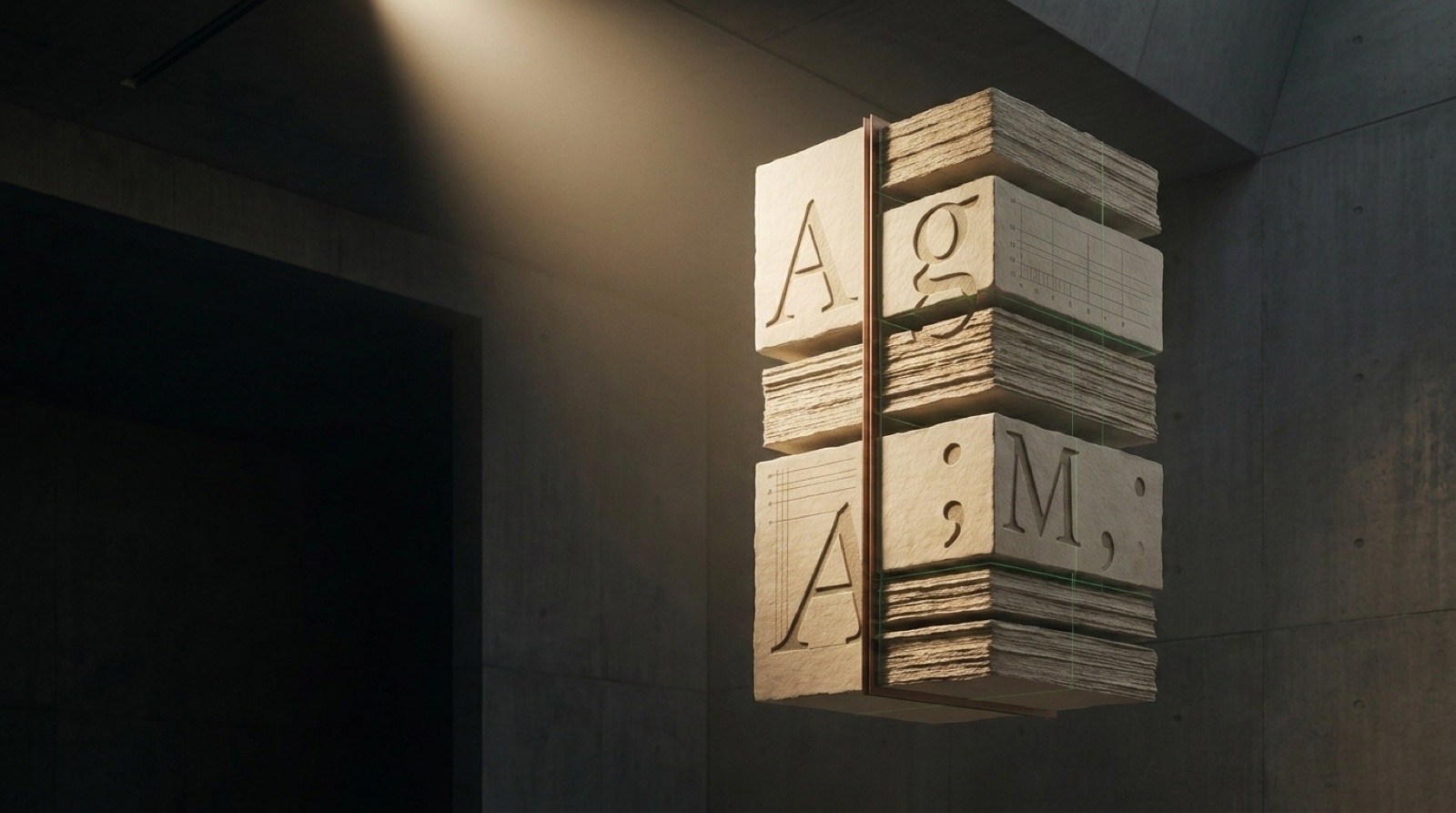
Conceptual visualisation · not an analysis result
A corpus is already an argument.
Genre, date, edition, audience, source, rights, and OCR shape what a comparison can mean. Delta asks you to document texts before any analysis.
- GENRE · DATE · EDITIONdocumented
- AUDIENCE · SOURCE · OCRdocumented
- RIGHTSunknown, recorded, not analysed, not cleared for public redistribution
One setting is not evidence.
Guided comparisons run 100, 300, 500, and 1,000 most-frequent-word settings together. 500 MFW opens first as a pre-specified display reference, not a best or optimal setting.
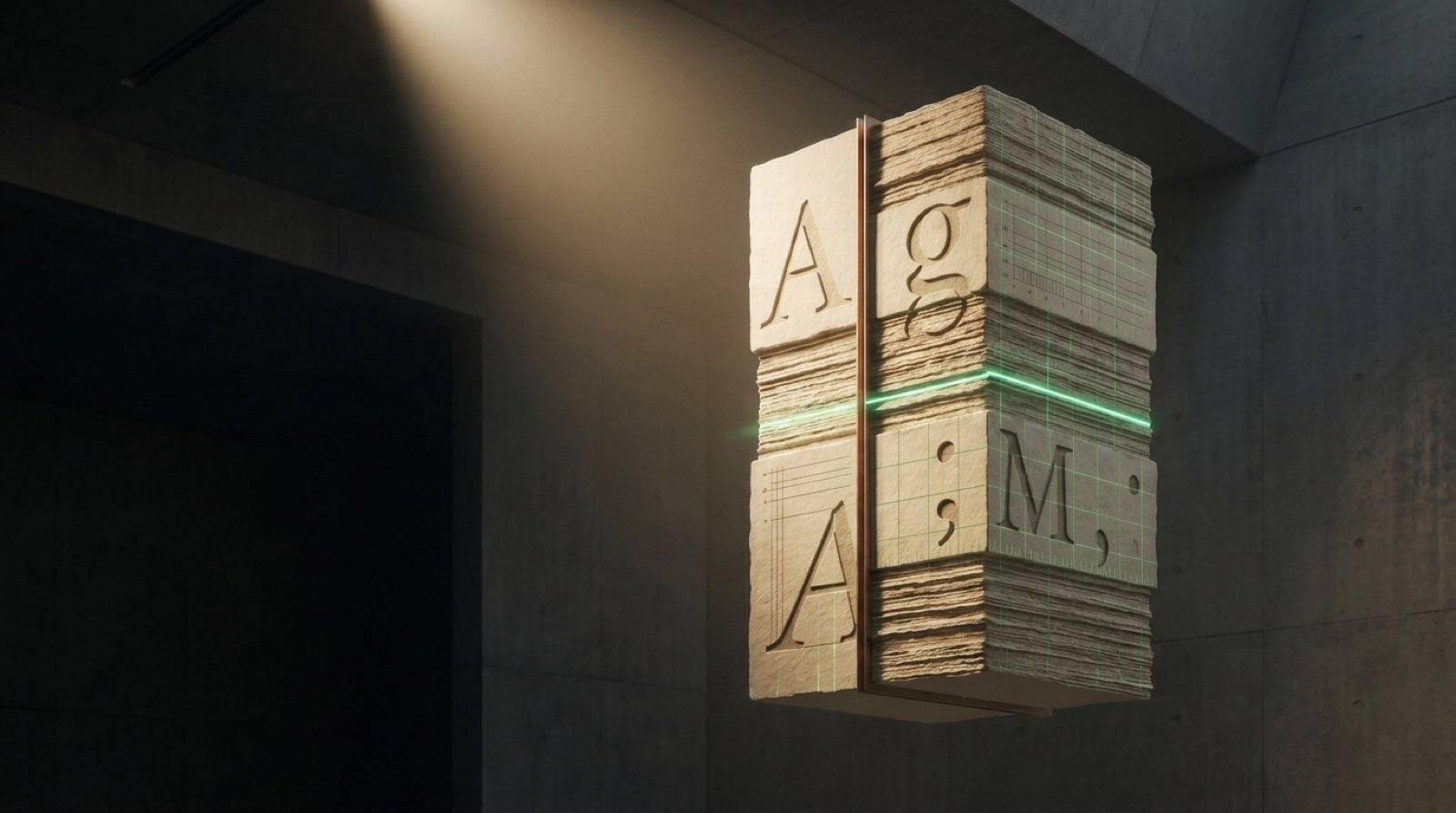
All four stay visible together · none is marked best
Distance is a relation, not a verdict.
Nearer means more similar measured patterns inside this corpus and this setting. The numerical distance matrix is the primary evidence; the heatmap and the MDS projection are renderings of the same matrix.
MDS axes have no literary meaning; apparent clusters can be projection artefacts.
Change the lens, watch the relation move.
A persuasive picture can still be sensitive to corpus composition, parameters, and projection. Delta keeps all four comparisons and every corpus warning side by side, with no winner-takes-all view and no confidence score.
Do not conclude: nearer does not mean the same author, influence, intention, or authenticity.
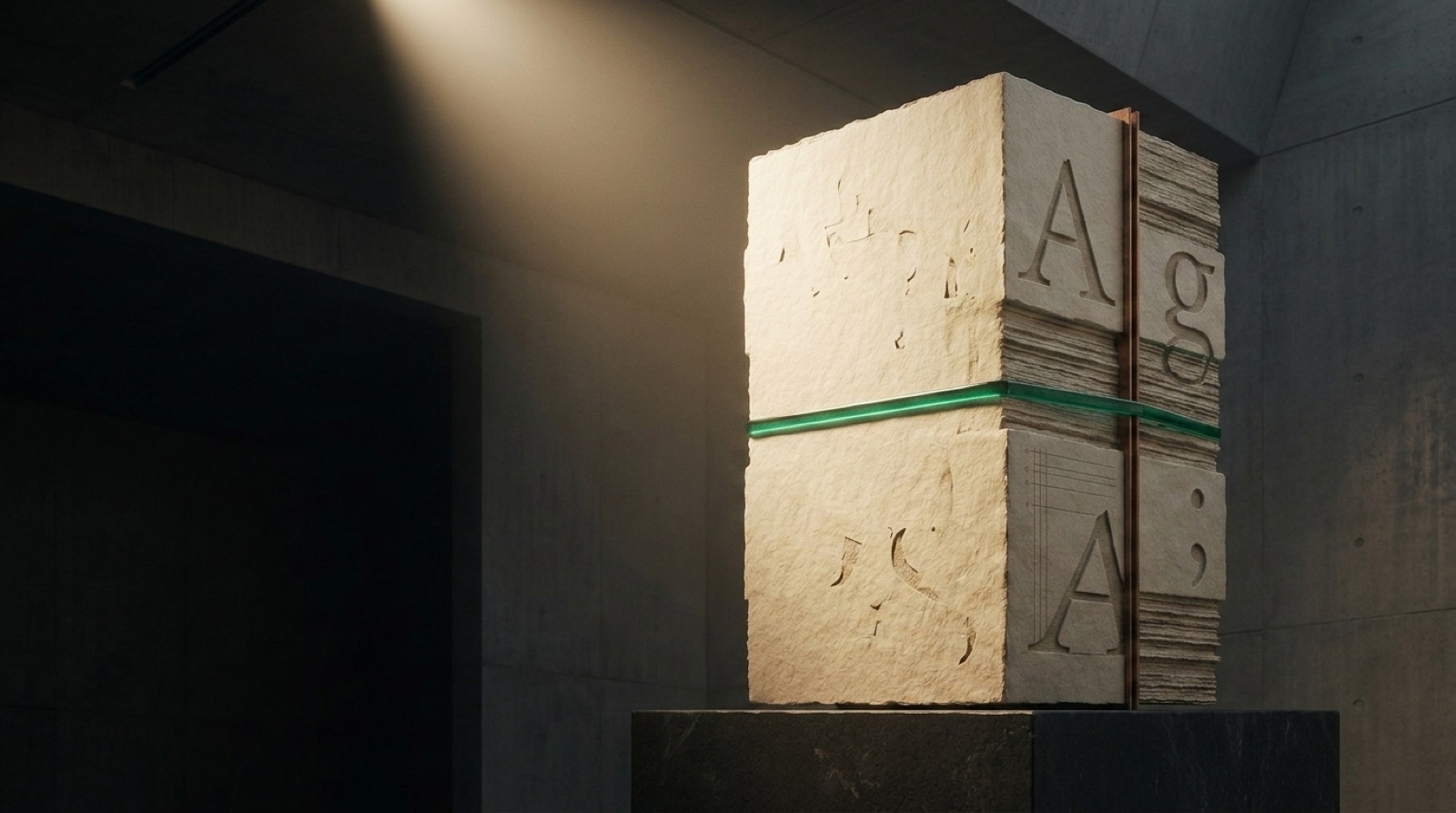
Keep the numbers, not just the picture.
Delta's records download as JSON and CSV files: the corpus inventory with its rights records, method settings, numerical results, and stated interpretation limits. A single FAIR package is not part of this alpha.
Run reference · Corpus documentation · Parameters · Matrix output · Rights summary · Interpretation boundary · Export record
The method, in plain terms
Delta computes Classic Delta (Burrows) distances with the R stylo package.
What the comparison runs
Stylometry observes recurring, measurable patterns in language use, such as how often common words recur. It does not read meaning, topics, or intent. Guided comparisons run 100, 300, 500, and 1,000 most-frequent-word settings together; 500 MFW opens first as a pre-specified display reference, not a best or optimal setting.
How to read distance
Nearer means more similar measured patterns inside this corpus and this setting. The numerical distance matrix is the primary evidence; the heatmap and the MDS projection are renderings of the same matrix, and the heatmap colour scale is local to the selected matrix. Axes of the MDS projection have no literary meaning; apparent clusters can be projection artefacts.
What stays visible
If a text's rights status is unknown, Delta records it. You can review the text, but it is not analysed and is not cleared for public redistribution. To run a comparison, each text needs documented permission to upload and analyse it. Delta keeps all four comparisons and every corpus warning side by side, with no winner-takes-all view and no confidence score. Do not conclude: nearer does not mean the same author, influence, intention, or authenticity.
Three research paths
- Compare texts
Recurring language patterns across individual texts.
In the workbench - Compare groups
Patterns across documented authors, genres, periods, or audiences.
In the workbench - Trace style over time
One writer's dated works in sequence.
In the workbench
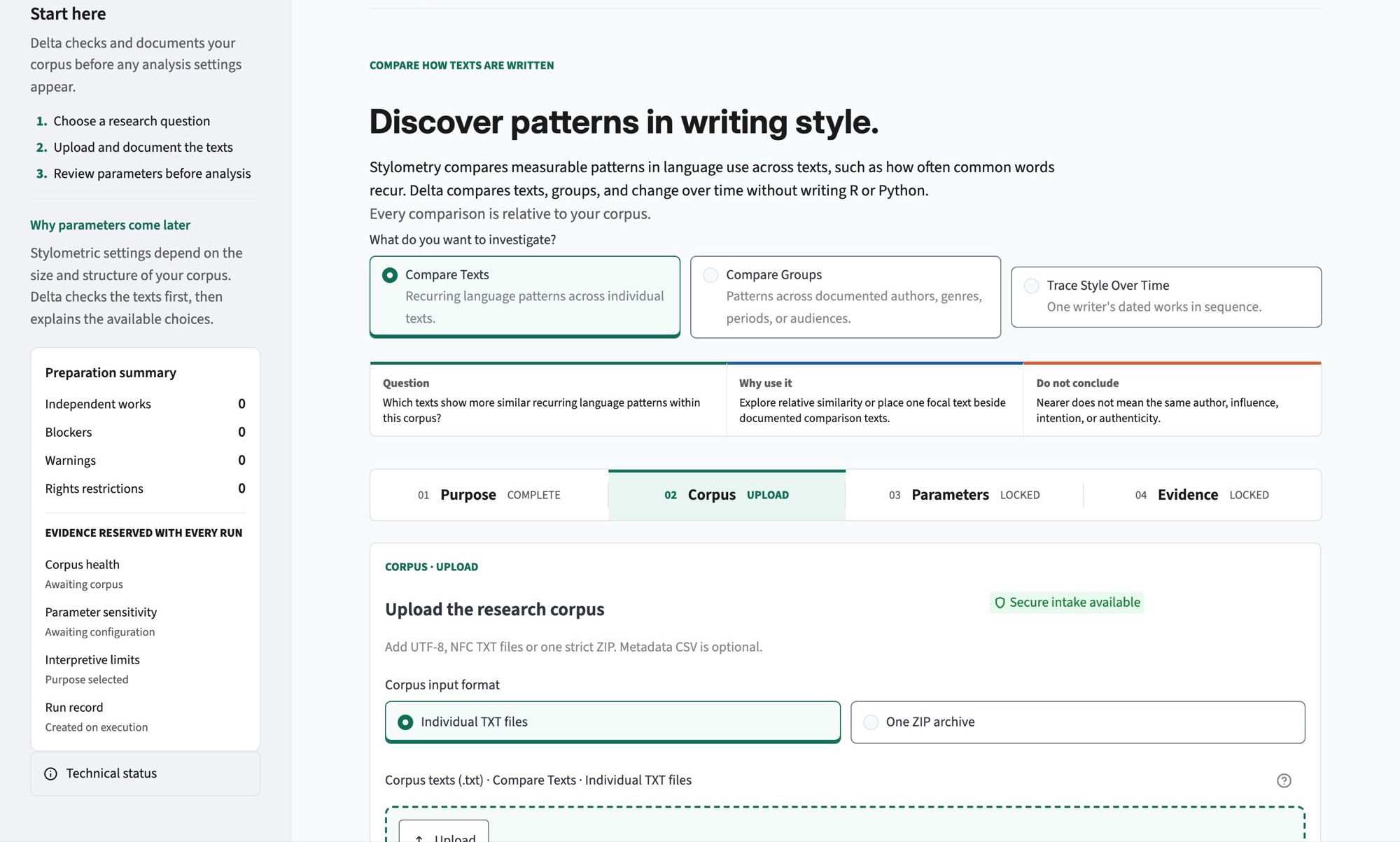
The workbench documents the corpus before any analysis setting appears. Purpose, corpus, parameters, evidence, in that order.
Three ways to ask a stylometric question.
In this alpha, a limited part of the guided path has been tested end to end. The full workflows for all three research purposes have not yet been validated.
Every comparison is relative to your corpus. Choose the question first; Delta explains the choices that follow.
Not ready to upload? Open the workbench and choose "Explore the example", a recorded comparison of three short texts created for it.
Which individual texts show more similar recurring language patterns within this corpus, and where does one focal text sit beside the others.
Patterns across documented authors, genres, periods, or audiences, always measured relative to the corpus you assembled.
How one writer's measured position varies across independently dated works. The dates order the corpus. Chronology alone does not establish ageing, maturation, a turning point, or a cause.
Cite Delta
Using Delta in your research?
Delta does not yet have an archived software release with a DOI. Until it does, cite the workbench as below. The DOI on the LDA page belongs to Lemmata LDA.
@software{koran_delta_2026,
  author = {Koran, Oğuz and Yücesan, Barış},
  title  = {Delta: An Uncertainty-Aware Stylometry Workbench},
  year   = {2026},
  url    = {https://delta.lemmata.app},
  note   = {Public alpha}
}
Bring your corpus. Keep the choices visible.
Public alpha · Experimental